Traveling the world has never been more accessible, but the real cost of a dream vacation often lies in the details: airfare, hotels, meals, and incidental fees. For savvy consumers, a well‑chosen credit card can transform those expenses into a treasure trove of points, miles, and elite status, effectively subsidizing the entire journey. Understanding how to select the best credit cards for travel rewards is therefore a critical step toward turning ordinary trips into extraordinary experiences.
In this comprehensive guide we will dissect the core components that differentiate premium travel cards from the crowd—annual fees, earning rates, transfer partners, travel protections, and redemption flexibility. By the end of the article you will have a clear roadmap to match your travel style with the card that delivers the highest value per dollar spent.
Whether you are a frequent flyer, an occasional wanderer, or a digital nomad who lives out of a suitcase, the principles outlined here will help you leverage credit card rewards without falling into common pitfalls such as unnecessary debt or wasted points. Let’s begin by establishing the criteria that define the true “best” in the realm of travel rewards.
What Makes a Card the Best Credit Cards for Travel Rewards?

Not all travel‑focused credit cards are created equal. The following five pillars should guide your evaluation:
- Earn Rate: How many points or miles do you earn per dollar on travel‑related purchases versus everyday spending?
- Transfer Flexibility: Can you move points to airline or hotel partners that align with your preferred travel routes?
- Redemption Value: Does the card offer a higher cent‑per‑point value when booking flights, hotels, or experiences?
- Travel Protections: Look for complimentary insurance, lounge access, and fee waivers that add tangible value.
- Cost Structure: Annual fees, foreign transaction fees, and introductory offers all affect the net return.
Balancing these factors against your personal spending habits will surface the cards that truly belong in the top tier of the best credit cards for travel rewards.
Earn Rates That Outpace the Competition
High‑earning categories are the lifeblood of any travel rewards strategy. For instance, a card that offers 3 × points on flights and hotels and 2 × points on dining can accelerate point accumulation dramatically for a food‑loving globetrotter. Some cards also provide a flat 1.5 × or 2 × points on all purchases, which is advantageous for users whose travel spend fluctuates throughout the year.
When comparing the best credit cards for travel rewards, pay attention to the “welcome bonus” as well. A generous sign‑up bonus—often 50,000 to 100,000 points after meeting a modest spend threshold—can provide a head‑start that outweighs a slightly lower ongoing earn rate.
Transfer Partners and Their Strategic Value
Transferability is a hallmark of premium travel cards. Programs that let you move points to airlines such as United, Delta, Emirates, or to hotel chains like Marriott and Hilton give you the flexibility to book award flights and stays at the lowest possible cost. A card that partners with multiple airlines increases the chance of finding award seats on your preferred routes.
For example, the Chase Sapphire Preferred® Card allows transfers to over a dozen airline partners, making it a versatile choice for a wide array of itineraries. Meanwhile, cards anchored to a single airline—though powerful for brand‑loyal flyers—may limit redemption options if the airline’s award inventory is thin.
Redemption Value: Points vs. Miles
Not all points are equal. Some cards calculate value in “cents per point,” a metric that helps you compare the real worth of each reward. A card that delivers 1.5 cents per point on travel purchases is generally superior to one that only provides 1.0 cent per point, assuming comparable fees.
Redemption channels also matter. Booking directly through a card’s travel portal often yields a fixed value (e.g., 1.25 cents per point for Chase Sapphire), while transferring points to airline partners can unlock values of 2 cents or more per point when booking premium cabin seats.
Travel Protections that Add Real Money Savings
Elite travel cards bundle a suite of protections that can save you hundreds, if not thousands, of dollars annually. Look for features such as:
- Trip cancellation and interruption insurance
- Rental car collision damage waiver (CDW)
- Lost luggage reimbursement
- Airport lounge access (e.g., Priority Pass™)
- No foreign transaction fees
Even if you rarely use these benefits, their presence boosts the overall return on the annual fee, especially for high‑spending travelers.
Cost Structure: Balancing Fees with Benefits
The annual fee is the most visible cost, but it must be weighed against the total value you receive. A $550 fee may seem steep, but if the card’s benefits—such as a $300 airline credit, $200 travel credit, and 1.5 cents per point redemption—total $1,200 in value, the net gain is substantial.
For budget‑conscious travelers, no‑annual‑fee cards can still offer solid rewards, especially when paired with a strategic spend plan. Compare the net return of each card by estimating the annual value of points earned, travel credits, and protections, then subtract the fee.
Top Picks Among the Best Credit Cards for Travel Rewards in 2024
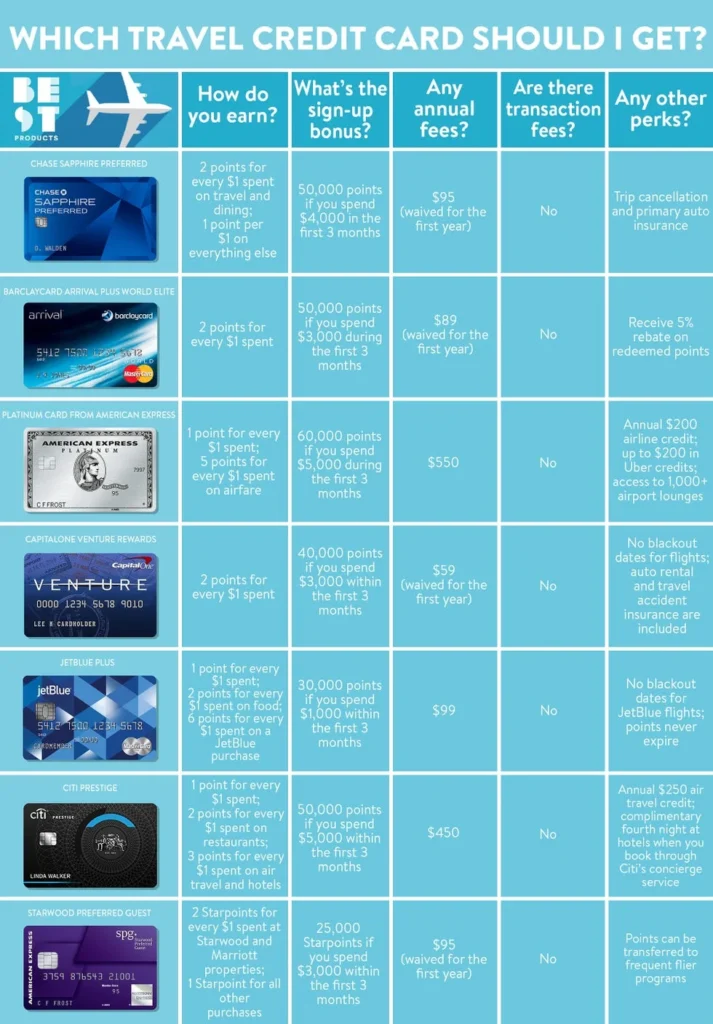
After applying the five pillars above, the following cards consistently emerge as the leaders in the category. Each card is described with its key features, ideal user profile, and potential annual net value.
1. Chase Sapphire Preferred® – The All‑Rounder
Earn Rate: 2 × points on travel and dining; 1 × point on all other purchases.
Welcome Bonus: 60,000 points after spending $4,000 in the first three months.
Transfer Partners: 13 airline and hotel partners, including United, Southwest, and Marriott.
Redemption Value: 1.25 cents per point through Chase Travel Portal; up to 2 cents per point when transferred.
Annual Fee: $95.
Why it ranks high among the best credit cards for travel rewards: the combination of a modest fee, solid earn rates, and flexible transfer options makes it suitable for both occasional and frequent travelers. The card also provides primary rental car insurance and trip cancellation coverage.
2. American Express® Gold Card – Dining‑Centric Traveler
Earn Rate: 4 × Membership Rewards points at U.S. supermarkets (up to $25,000 per year) and restaurants worldwide; 3 × points on flights booked directly with airlines.
Welcome Bonus: 60,000 points after $4,000 spend in the first six months.
Transfer Partners: Over 20 airline partners, including Delta, British Airways, and Emirates.
Annual Fee: $250.
The Amex Gold shines for food lovers who spend heavily on dining. Its high grocery earn rate and $120 dining credit (up to $10 per month at select restaurants) can offset the annual fee quickly, delivering a high effective point value when transferred to airline partners.
3. Capital One Venture X Rewards Credit Card – Premium Luxury
Earn Rate: 2 × miles on every purchase; 10 × miles on hotels and rental cars booked through Capital One Travel.
Welcome Bonus: 75,000 miles after $4,000 spend in the first three months.
Transfer Partners: 15 airline partners, including Air Canada Aeroplan, Etihad Guest, and Singapore Airlines KrisFlyer.
Annual Fee: $395.
Beyond its generous miles‑per‑dollar rate, the Venture X bundles a $300 travel credit, Priority Pass lounge access, and a complimentary companion ticket each year. These perks alone can generate more than $800 in value, making it a top contender among the best credit cards for travel rewards for those who travel extensively.
4. Citi® / AAdvantage® Platinum Select World Elite Mastercard – Airline‑Focused
Earn Rate: 2 × AAdvantage miles on American Airlines purchases; 1 × mile on all other purchases.
Welcome Bonus: 50,000 miles after $2,500 spend in the first three months.
Annual Fee: $99 (waived the first year).
Ideal for frequent flyers of American Airlines, this card offers a free checked bag, preferred boarding, and a $125 American Airlines flight discount after $10,000 in spend. While the earn rate is lower than flexible‑point cards, the airline‑specific benefits can outweigh the difference for loyal AA customers.
5. No Annual Fee Option – Discover it® Miles
Earn Rate: 1.5 × Miles on all purchases.
Welcome Bonus: Match of all miles earned in the first year.
Annual Fee: $0.
For travelers who prefer to avoid fees, the Discover it® Miles provides a straightforward earn structure and a first‑year miles‑matching offer that effectively doubles your points. While it lacks premium travel protections, it can serve as an excellent supplementary card to round out a rewards portfolio.
How to Maximize Returns from the Best Credit Cards for Travel Rewards

Choosing the right card is only half the battle. The real power lies in strategic usage that aligns spending categories with the highest earn rates and leverages transfer partners efficiently.
Strategic Spending Allocation
Map your annual expenses to the card that offers the highest multiplier. For example, use a 4 × points card for dining, a 3 × points card for airline purchases, and a 2 × points flat‑rate card for all other spend. This “spend‑by‑category” approach can increase your total points haul by 20‑30% compared to a single‑card strategy.
Timing Your Redemption
Redemption value fluctuates based on award seat availability, seasonality, and airline pricing algorithms. Monitoring award charts and booking during off‑peak windows often yields the best cent‑per‑point value. Additionally, consider using the credit card points redemption guide to learn advanced tactics such as “sweet spot” transfers and “stop‑over” tricks.
Combine Cards for Synergy
Many travelers find that pairing a flexible‑point card (e.g., Chase Sapphire Preferred) with an airline co‑branded card (e.g., Citi AAdvantage Platinum Select) maximizes both earn rates and elite status benefits. The flexible card handles everyday spend, while the airline card focuses on flight purchases and provides airline‑specific perks.
Utilize Travel Credits and Perks
Annual travel credits (e.g., $200 airline credit, $300 travel credit) are often overlooked. Make sure you schedule purchases—such as airline tickets or rideshares—through the appropriate portal to capture these credits, effectively lowering your net cost.
Maintain a Healthy Credit Profile
Applying for multiple travel cards can impact your credit score if done indiscriminately. Follow a disciplined approach: space out applications by at least three months, and keep utilization below 30 % of total credit limits. For guidance on building credit while pursuing rewards, see the best credit cards for building credit history – 2024 guide.
Frequently Asked Questions about the best credit cards for travel rewards

Do I need a perfect credit score to qualify for the best credit cards for travel rewards?
Most premium travel cards require good to excellent credit (typically a FICO score of 700 or higher). However, there are entry‑level options—such as the Discover it® Miles—that accept fair credit and still provide solid rewards.
How quickly can I earn enough points for a free flight?
With a high‑earning card that offers 3 × points on travel and a $500 annual fee, a frequent flyer spending $15,000 a year on flights can accumulate 45,000 points in a single year—enough for a round‑trip domestic award flight on many airlines.
Is it better to book directly with airlines or through a card’s travel portal?
Both methods have merits. Booking through a portal guarantees a fixed redemption value (e.g., 1.25 cents per point for Chase Sapphire). Direct transfers to airline partners can yield higher values for premium cabin awards, but require flexibility and availability.
Can I combine points from multiple cards?
Points are generally siloed within each issuer’s program, but many programs allow pooling of points among household members (e.g., Chase Ultimate Rewards). Additionally, you can transfer points from separate cards to the same airline partner, effectively consolidating balances.
What happens to my points if I close a card?
Points earned in a flexible‑point program (e.g., Chase, Amex) typically remain as long as you keep at least one card from the same issuer open. Airline‑specific miles may be forfeited if you close the associated co‑branded card, so consider transferring or redeeming them before cancellation.
In summary, the best credit cards for travel rewards are those that align with your spending patterns, offer high‑value redemption options, and provide a suite of travel protections that offset their annual fees. By carefully selecting a mix of flexible‑point and airline‑specific cards, optimizing spend categories, and staying disciplined with credit management, you can turn everyday purchases into unforgettable journeys. Happy travels, and may your points always be plentiful.